Cross-Functional Leadership Reputation: An Executive Playbook
Building a cross-functional leadership reputation means deliberately demonstrating and marketing your ability to lead across departments, not listing tasks. The fastest path: select a small number of high-impact cross-department projects, measure the business outcomes, and make those results visible on your resume, LinkedIn, and in interviews while cultivating advocates who speak for you in rooms you’re not in.
Start here:
- Choose one visible project that spans at least two departments and ties to a company priority
- Document measurable outcomes (cost saved, revenue influenced, time reduced, adoption rate)
- Publish a LinkedIn Featured case study using the context-role-stakeholders-outcome format
- Prepare one STAR interview story with a named stakeholder and a specific result
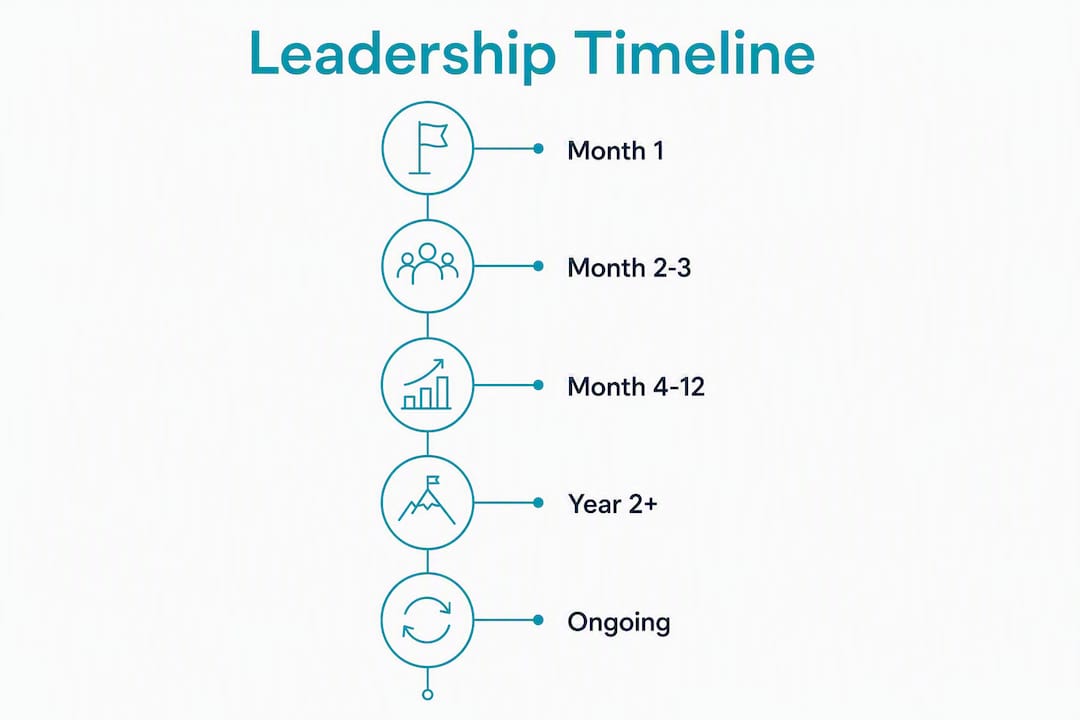
Timeline callout: Repositioning typically takes 6 to 12 months of consistent signals: strategic projects, strategic language, and visible contexts. Short wins appear in 30 to 90 days. Promotion-level evidence takes 6 to 18 months.
Table of Contents
- What does your first 90 days (and first year) look like?
- How do you pick cross-functional projects that actually build your reputation?
- How do you write resume bullets that prove cross-functional leadership?
- How do you use LinkedIn to showcase cross-functional case studies?
- How do you tell cross-functional leadership stories in interviews?
- How long does it take to see real reputation signals?
- When should you hire a resume writer or career coach?
- Key Takeaways
- Why cross-functional reputation work is worth the investment
- Resumewiz helps you turn cross-functional results into career momentum
- Useful resources and templates
What does your first 90 days (and first year) look like?
A clear sequence separates professionals who build real cross-functional credibility from those who stay busy without gaining visibility.
Days 1 to 30:
- Audit your current reputation: ask 3 to 5 peers from other functions how they’d describe your leadership style and where they’ve seen you add value
- Identify 1 to 2 cross-functional projects already in motion that you can step into with a defined contribution
- Set one measurable goal per project (a metric you can own and report on)
- Map your stakeholders: who influences decisions in each function you’ll touch?
Days 31 to 60:
- Run your first cross-functional sprint, a focused 2 to 4 week push with a defined deliverable and at least two departments involved
- Document the outcome in writing: a one-pager, a brief case study, or a shared results summary
- Share the result with your manager and one senior stakeholder outside your function
Days 61 to 90:
- Solicit 360 feedback from 3 to 5 cross-functional peers: what worked, what they noticed, what they’d recommend you do more of
- Draft your first LinkedIn Featured case study from the sprint outcome
- Prepare one STAR story from the project for interview or outreach use
Months 4 to 12: Scale to a second project, build a reusable framework or playbook from your work, and seek invitations to cross-functional forums, steering committees, or executive briefings where your name becomes associated with outcomes.
Pro Tip: Saying yes to every cross-functional request dilutes your reputation rather than building it. Own 2 to 3 signature projects deeply instead of spreading thin across ten.
How do you pick cross-functional projects that actually build your reputation?
Not every cross-functional assignment signals leadership to decision-makers. The ones that do share four traits.
Selection criteria:
- Visibility to senior leaders: the project has a named executive sponsor or reports to a leadership team
- Measurable business impact: you can attach a number to the outcome (cost, revenue, speed, adoption, risk reduction)
- Cross-department stakeholder mix: at least two functions with different priorities must align for the project to succeed
- Alignment with company priorities: the work connects to a stated strategic goal, not a one-off operational fix
Strong project types to target:
- Customer experience redesigns that require product, operations, and marketing to coordinate
- Cost-reduction initiatives with shared ownership across finance, supply chain, and operations
- Go-to-market coordination for a new product or market entry
- Cross-functional process redesigns that remove handoff friction between departments
Red flags to avoid:
- Low-visibility firefighting that keeps you reactive and invisible to senior stakeholders
- Projects confined to your own function dressed up as cross-functional work
- Assignments that increase your workload without producing a documentable outcome
Influence without authority (the ability to align people who don’t report to you) is the core skill matrixed organizations are hiring for. Choose projects that force you to practice it visibly.
How do you write resume bullets that prove cross-functional leadership?
Every bullet should answer: What changed, by how much, and who else was involved? That structure passes ATS scans and gives hiring managers the evidence they need.
Bullet templates (adapt to your level):
| Level | Template |
|---|---|
| Mid-level | “Led cross-functional initiative with [teams] to [action], resulting in [metric] within [timeframe].” |
| Senior | “Aligned [functions] around [strategic goal]; drove [outcome] that [business impact].” |
| Director+ | “Partnered with [C-suite/VP] and [functions] to redesign [process/system]; delivered [metric] improvement in [timeframe].” |
| Career changer | “Coordinated [departments] to [solve problem], producing [measurable result] and [stakeholder outcome].” |
Example bullets:
- Partnered with Finance and Operations to redesign procurement workflow; cut vendor onboarding time by 40% across three business units
- Led cross-functional product launch team (Marketing, Engineering, Sales) for a $4M revenue line; delivered on schedule with 95% stakeholder approval
- Collaborated with HR and IT to implement a change management program affecting 300+ employees; reduced adoption friction by 30% in 60 days
- Aligned Legal, Compliance, and Product on a regulatory response; resolved a critical gap six weeks ahead of deadline
ATS-friendly keywords to include naturally:
- Stakeholder management, matrix leadership, cross-functional collaboration
- Change management, systems thinking, influence without authority
- Executive alignment, enterprise-wide initiatives, cross-departmental coordination
Formatting rules: 3 to 6 bullets per recent role, lead with your 2 to 3 strongest achievements before the “See more” threshold, use consistent past tense, and keep section headers ATS-safe (“Experience,” not “Where I’ve Made an Impact”).
Career stories that explain the how (the systematic approach behind the result) give recruiters and leaders the context to see your strategic value, not just your output.
How do you use LinkedIn to showcase cross-functional case studies?
LinkedIn gives you space the resume doesn’t. Use it to tell the full story.
Featured section case study format:
- Context: one sentence on the business problem and which functions were involved
- Your role: what you owned, who you influenced, and what decisions you drove
- Stakeholders: name the functions (not individuals) you coordinated
- Outcome: the measurable result and its business significance
- Reusable asset: attach a one-pager, slide, or framework so the case study is portable
Experience section tactics: Lead with achievement lines in the first 2 to 3 lines of each role, recruiters skim past the fold. Mirror your resume’s strongest bullets, then expand with 3 to 6 achievement points that show cross-departmental influence and include keywords like “stakeholder management,” “agile,” and “matrix leadership.”
Posting cadence:
- Monthly: publish one cross-functional case study or results update
- Quarterly: share a lesson or framework from a completed project
- Ongoing: engage with posts from cross-functional peers to surface your name in their networks
Pro Tip: Attach a one-pager or slide deck to your Featured case study. A portable artifact makes your story immediately credible and gives recruiters something to forward.
How do you tell cross-functional leadership stories in interviews?
Open with the outcome. Hiring managers decide in the first 15 seconds whether your answer is worth following. Give them the result first, then the context.
STAR-S framework (Situation, Task, Action, Result, Stakeholder):
- One-line outcome statement: “I led a cross-functional team that reduced customer churn by 18% in one quarter.”
- Situation: briefly describe the business problem and which functions were involved
- Task: your specific ownership and what you were accountable for
- Action: how you influenced without authority, the stakeholder coordination, the decisions you drove, the friction you resolved
- Result: the quantified outcome and its business impact
- Stakeholder close: name the functions that benefited and what they said or did as a result
Short version (30 to 45 seconds): outcome statement + one-sentence context + your key action + the metric.
Long version (2 to 3 minutes): full STAR-S with stakeholder dynamics, one obstacle you navigated, and a closing line connecting the lesson to the role you want.
Outreach script example: “In my last role, I coordinated Finance, Operations, and Product to redesign a fulfillment process that cut costs by $1.2M annually. I’d welcome a conversation about how that experience maps to [company’s] current priorities.”
How long does it take to see real reputation signals?
Track these metrics to know whether your efforts are working:
- Number of cross-functional projects led (target: 2 to 3 active or completed)
- Visible artifacts published (LinkedIn case studies, one-pagers, playbooks)
- Peer advocacy mentions: how often cross-functional colleagues reference you in meetings or to leadership
- Invitations to cross-functional forums, steering committees, or executive briefings
- Interview callbacks where the interviewer specifically references your cross-functional experience
| Timeframe | Expected signal |
|---|---|
| 30 to 90 days | First documented outcome, one LinkedIn case study published, one STAR story ready |
| 3 to 6 months | Peer advocacy building, 2 to 3 artifacts visible, invitations to cross-functional forums |
| 6 to 18 months | Promotion-level evidence: documented outcomes, stakeholder endorsements, reusable frameworks |
Volunteering to solve others’ problems before you need favors builds the lateral trust that turns peers into sponsors. That pattern is what creates reputation signals before a formal role ever posts.
When should you hire a resume writer or career coach?
Three situations where professional help accelerates outcomes faster than DIY:
- You have strong results but low visibility despite them, your resume and LinkedIn don’t reflect the seniority of your work
- You’re preparing for an executive search and need ATS-compliant materials and polished STAR stories quickly
- Competing priorities mean you won’t realistically build these assets on your own timeline
What a good engagement delivers:
- ATS-compliant resume rewrite with cross-functional achievement bullets
- LinkedIn Featured case study development and Experience section optimization
- 2 to 3 coached STAR stories with stakeholder framing
- Outreach templates with measurable outcomes embedded
- Packaged job search support with a defined timeline
“The professionals who get the most from career services come in with real outcomes and leave with a narrative that makes those outcomes land with decision-makers. The gap between what you’ve done and what a hiring manager understands you’ve done is almost always a communication problem, not a results problem.” Kim Taynor, Founder of Resumewiz, 10+ years recruiting experience
When evaluating any provider, ask for sample deliverables, a clear revision policy, and a defined timeline. Concierge-level coaching that tailors the engagement to your specific career context produces faster results than off-the-shelf packages.
Key Takeaways
Building a cross-functional leadership reputation requires selecting a small number of high-impact projects, documenting measurable outcomes, and making those results visible on your resume, LinkedIn, and in interviews while cultivating peer advocates.
| Point | Details |
|---|---|
| Choose projects deliberately | Target a few initiatives with executive visibility, measurable impact, and multi-department stakeholders. |
| Quantify every outcome | Resume bullets and LinkedIn case studies must include a metric, a timeframe, and your specific role. |
| Reputation signals take time | Short wins appear in 30 to 90 days; promotion-level evidence typically takes 6 to 18 months of consistent signals. |
| Run a 30-day sprint | Audit your reputation, complete one cross-functional deliverable, and publish one LinkedIn case study. |
| Resumewiz accelerates the process | Kim Taynor’s team delivers ATS-ready resumes, LinkedIn optimization, and STAR story coaching for executives targeting promotions or new roles. |
Why cross-functional reputation work is worth the investment
Most executives I work with have done the hard work. They’ve led the initiatives, navigated the politics, and delivered real results across departments. What they haven’t done is translate that work into language that travels, language that lands with a hiring committee at 7 PM when they’re reviewing a stack of resumes, or with a search firm that’s deciding who to put in front of a board.
Cross-functional leadership is the capability organizations are most actively trying to hire and promote for right now. The professionals who get ahead aren’t necessarily doing more of it. They’re the ones who’ve learned to make it legible: a crisp bullet, a Featured case study, a 45-second story that opens with the outcome. That’s the gap worth closing.
Resumewiz helps you turn cross-functional results into career momentum
If you’ve led cross-department initiatives but your resume and LinkedIn still read like a job description, that’s the problem Resumewiz solves. Kim Taynor and her team specialize in translating executive-level cross-functional work into ATS-compliant resumes, LinkedIn profiles that lead with outcomes, and interview coaching that sharpens your STAR stories before they matter.
Services include executive resume writing, LinkedIn Featured case study development, cover letter creation, interview preparation, and a fully managed job search with tailored applications and outreach. Every engagement is built around your specific outcomes, not a template.
Work with Resumewiz to get materials that reflect the seniority of what you’ve actually done.
Useful resources and templates
- Resumewiz services and templates: Executive resume writing, LinkedIn optimization, interview coaching, and managed job search, with templates and guides for professionals building their cross-functional narrative.
- Embedded leadership guidance: Best-practice reading on building authentic influence in cross-functional contexts, useful for deepening your stakeholder strategy.
- Career positioning playbook: Framework for auditing your current reputation, identifying the gap, and repositioning through selective project choices.
Want a recruiter in your corner for your next senior role? Book a free call with Resume Wiz and we will map out your next move together.
