Hidden Job Market for Senior Roles: Your 2026 Guide
The hidden job market for senior roles is defined as the pool of executive and director-level positions filled through referrals, retained search firms, and direct outreach rather than public job postings. Research shows 70 to 80% of Director-level and above roles fill through non-public channels, with C-suite and VP positions exceeding 80%. That figure means the majority of the most consequential career opportunities never appear on any job board you can search. Senior professionals who rely solely on posted listings are competing for a small fraction of what actually exists. The executives who advance fastest understand this market, know how to read its signals, and position themselves to be found before a role is ever announced.
Why does the hidden job market for senior roles exist?
Companies fill senior roles discreetly for three concrete reasons: cost, confidentiality, and speed.
Public job postings at the executive level generate high volumes of unqualified applicants, require significant screening resources, and carry fees when third-party boards are involved. Companies save between $1,000 and $5,000 per senior posting by hiring through referrals or retained search. That saving alone makes discreet hiring the default preference at most organizations.
Confidentiality matters even more. When a company needs to replace a sitting VP or C-suite leader, a public posting signals instability to competitors, clients, and internal staff. Boards and CEOs cannot afford that signal. They call a trusted retained search firm instead, which conducts the search quietly and presents a shortlist of vetted candidates before any public announcement.
Speed is the third driver. Retained searches fill senior roles 40% faster than public postings. Retained firms work from curated networks and deliver candidates who are already known quantities. That efficiency is worth the premium fee.
The practical result for you: the hiring decision at the senior level often happens before a role is ever written up. By the time a posting appears, the shortlist may already exist.
- Retained executive search firms receive an exclusive mandate and work discreetly from their own candidate networks.
- Referral-preference culture means hiring managers trust a recommendation from a peer over an unknown application.
- Internal succession planning fills some roles before any external search begins.
- Direct outreach from known candidates occasionally prompts companies to create roles that were not formally open.
Pro Tip: Build a relationship with two or three retained search consultants who specialize in your function and sector. These consultants fill roles before they are posted, and they call candidates they already know.
What signals indicate openings in the unadvertised senior job market?
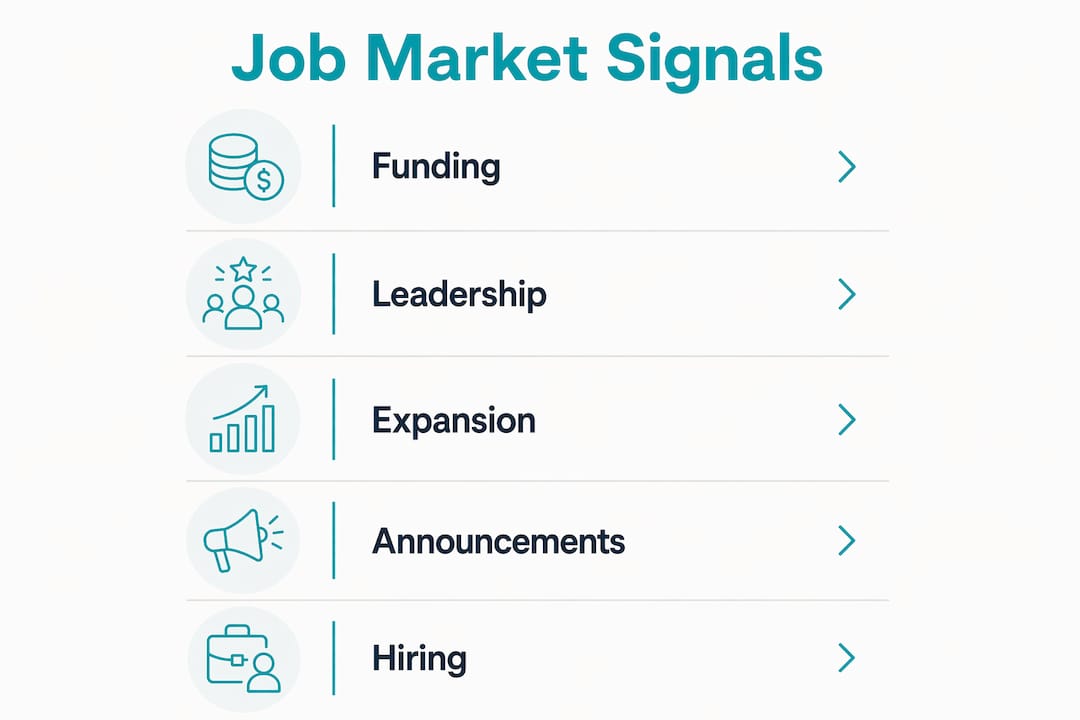
Recruiters and boards act on leading hiring indicators weeks before a public posting appears. Monitoring corporate signals such as funding rounds and leadership changes gives you early insight into where senior hiring is imminent. Executives who reach out at this stage face far less competition than those who respond to a posted role.
The most reliable signals to track are:
- Series B or C funding announcements. Growth capital almost always triggers senior hiring in finance, operations, and commercial leadership.
- New market entries or product launches. Expansion into a new geography or category creates demand for experienced leaders who have done it before.
- Executive departures or promotions. A VP moving up or out creates a vacancy. LinkedIn activity and press releases surface these changes quickly.
- Board composition changes. New board members often bring a mandate to upgrade the leadership team.
- Merger or acquisition activity. Integration requires senior talent in finance, HR, and operations almost immediately.
The table below shows how to match each signal to a specific outreach approach.
| Signal | What it means | Your move |
|---|---|---|
| Funding round closed | Headcount expansion is approved | Reach out to the CEO or CFO within two weeks |
| Executive departure announced | Vacancy is confirmed or imminent | Contact the retained search firm in that sector |
| New market entry announced | Functional leadership gap exists | Send a targeted note to the relevant division head |
| Board member added | Leadership review likely underway | Engage through a shared board connection |
Pro Tip: Set Google Alerts for your 20 target companies using terms like “appoints,” “raises,” and “expands.” Review them weekly and respond within days, not weeks. Timing is the variable most senior professionals underestimate.
How can senior professionals position themselves in the hidden executive market?
The hidden executive market is a reputation economy, not a volume game. Executives who apply to more than 50 companies often sacrifice the focus and recall that make referrals possible. A recruiter or peer can only advocate for you if they can describe you in one clear sentence.
Broad visibility without a focused personal brand actively hinders referrals. Recruiters prefer highly specific candidates with a clear value proposition over versatile generalists. “I’m open to a range of senior roles” is the least effective thing you can say to a search consultant. “I build commercial functions for Series B SaaS companies entering enterprise markets” is the kind of specificity that gets you called.
Positioning yourself effectively requires four things working together:
- A coherent career narrative. Your last three roles should tell a single story about the problem you solve and the results you deliver. Gaps in logic or abrupt pivots create doubt.
- A LinkedIn profile that matches your narrative. Your headline, summary, and featured section must reinforce the same message. Inconsistency between your resume and LinkedIn profile signals a lack of clarity.
- External presence in your domain. Speaking at industry events, publishing on LinkedIn, or contributing to trade publications puts your name in front of decision-makers before they have a need.
- A focused target list. Identify 15 to 25 companies where your specific background solves a real and current problem. Depth of engagement with a short list outperforms shallow contact with a long one.
Positioning yourself as a solution to a specific business need with a coherent narrative makes you easy to advocate for. A search consultant who can describe your value in one sentence will call you first. One who cannot will call someone else.
Effort alone does not drive advancement at the senior level. Aligning your candidacy around specific organizational gaps, and understanding the business timing of those gaps, is what separates executives who get called from those who apply and wait.
What networking strategies unlock unadvertised executive roles?
Networking for senior roles works best when you treat it as intelligence gathering, not job requesting. Network conversations should focus on gathering market perspective and industry advice rather than asking “Do you know of any openings?” That question signals desperation and puts your contact in an uncomfortable position. It also ends the conversation before it starts.
The more effective approach is peer-level dialogue. Ask a former colleague what they are seeing in the market. Ask a board member how a particular sector is evolving. Ask a search consultant what skills are in demand for the function you lead. These conversations build rapport, establish your credibility as a peer, and create the conditions for organic recommendations.
Practical networking tactics that work at the executive level:
- Maintain a live target company list. Update it monthly with new intelligence from conversations and public signals. This list drives your outreach calendar.
- Request 20-minute calls, not coffee meetings. Senior contacts respond better to a specific, time-bounded ask with a clear topic.
- Follow up with value. After a conversation, send a relevant article or introduce two people who should know each other. Reciprocity builds the relationship without asking for anything.
- Use warm introductions. A direct message to a stranger converts at a fraction of the rate of an introduction from a shared connection. Identify who in your network can introduce you to the people you need to reach.
- Avoid broadcasting your search widely. Telling everyone you are looking reduces your perceived value. Selective, targeted outreach preserves your positioning.
Pro Tip: Treat every senior conversation as a long-term relationship, not a transaction. The executive who referred you to a role in 2026 may be the one who calls you directly about a board seat in 2028.
Key Takeaways
The hidden executive job market fills the majority of senior roles through referrals, retained search, and direct outreach, making precise positioning and early signal detection more valuable than any job board application.
| Point | Details |
|---|---|
| Most senior roles are unadvertised | 70 to 80% of Director-level and above positions fill through non-public channels. |
| Timing determines access | Reaching out after a funding round or leadership change puts you ahead of the posted-role crowd. |
| Specificity beats broad visibility | Recruiters advocate for candidates they can describe in one clear sentence, not generalists. |
| Networking is intelligence work | Ask for market perspective, not job leads, to build peer credibility and earn organic referrals. |
| Retained search firms are gatekeepers | Build relationships with two or three retained consultants in your sector before you need them. |
What I have learned after a decade of watching executives search
Most senior professionals enter the hidden market with the wrong mental model. They assume that working harder, applying to more roles, and updating their resume will produce results. That logic works at the individual contributor level. At the VP and C-suite level, it produces silence.
The executives I have seen gain traction fastest share one trait: they are specific. They know exactly what problem they solve, for what type of organization, at what stage of growth. That specificity makes them easy to refer. A search consultant or peer can place them in a conversation in seconds because the fit is obvious.
The second thing I have observed is that timing is underrated. Most senior professionals reach out after they see a signal, which means they are already behind. The executives who get called are the ones who have been in conversation with the right people for months before a need arises. Relationship quality compounds over time. A contact you cultivated two years ago is worth ten cold outreach attempts today.
The third misconception is that the hidden market is a secret club with a locked door. It is not. The door opens through consistent, specific, and generous engagement with the right people. You do not need to know everyone. You need to be known well by a focused group of people who can advocate for you when the moment arrives.
The executives who struggle longest are the ones who treat their search as a private project. They update their resume, send applications, and wait. The ones who succeed treat their search as a public professional practice, one where their expertise is visible, their positioning is clear, and their relationships are warm before they need them.
Kim
How Resumewiz helps executives access unadvertised roles
Senior professionals targeting the hidden executive market need more than a polished resume. They need a complete professional presence that signals the right thing to the right people at the right moment.
Resumewiz specializes in exactly that. The platform offers executive resume development and LinkedIn profile optimization built around a clear personal narrative, so retained search consultants and hiring decision-makers can advocate for you immediately. Kim Taynor’s team brings over 10 years of recruiting experience to every engagement, translating your career history into a focused value proposition that opens doors in the unadvertised market. Whether you need a complete resume overhaul, outreach templates, or a fully managed job search, Resumewiz delivers the tools senior professionals need to compete where the real opportunities live.
Want a recruiter in your corner for your next senior role? Book a free call with Resume Wiz and we will map out your next move together.
FAQ
What percentage of senior roles are never posted publicly?
Research shows 70 to 80% of Director-level and above roles fill through non-public channels, with C-suite and VP positions often exceeding 80%. Most executive opportunities never appear on public job boards.
How do retained executive search firms differ from contingency recruiters?
Retained search firms receive an exclusive mandate and work discreetly from curated networks, filling roles before any public posting. Contingency recruiters submit candidates speculatively and are paid only on placement, making them less central to confidential senior searches.
How do I find unadvertised senior jobs before they are posted?
Monitor corporate signals such as funding rounds, leadership changes, and new market entries. Reach out to relevant decision-makers within two weeks of a signal, before a search formally begins.
Why does broad networking hurt senior job seekers?
Applying broadly without narrative coherence reduces your recall among the people who could refer you. Recruiters advocate for candidates they can describe precisely, not generalists who are open to everything.
What is the most effective way to approach networking for senior roles?
Ask contacts for market perspective and industry advice rather than job leads. This approach builds peer credibility and creates the conditions for organic recommendations without signaling desperation.
