How to Network for Executive Jobs: 2026 Guide
Executive networking is the practice of building targeted, mutually beneficial professional relationships to access leadership roles that never appear on public job boards. If you want to know how to network for executive jobs, the core truth is this: most C-suite and VP-level positions are filled through referrals and private channels before a posting ever goes live. LinkedIn, relationship mapping tools like ExecAtlas, and specialist retained search firms are the primary channels that make this possible. Success requires a tiered outreach plan, a sharp personal brand, and measurable activity goals, not random coffee chats.
How to network for executive jobs: tools and prerequisites
The right infrastructure separates productive executive networking from wasted effort. Before you send a single message, you need three things in place: a clear value proposition, a target contact list, and the right platforms.
Your positioning statement is the foundation. It answers the question every contact will silently ask: “Why should I spend time on this person?” Keep it to two sentences. Lead with the business problem you solve, then name the scale at which you solve it. “I lead commercial transformations for mid-market SaaS companies, typically growing revenue 30 to 40% within 18 months” is specific enough to be memorable and useful.
Platform selection matters more than most executives realize. LinkedIn remains the primary tool for identifying decision-makers, mapping shared connections, and publishing thought leadership content. ExecAtlas adds a layer that LinkedIn cannot: it maps executive relationships through shared board seats, career overlaps, and alumni affiliations, giving you the shortest path to a warm introduction. For effective executive outreach, combining both platforms with a simple CRM or spreadsheet tracker is the minimum viable setup.
| Tool | Primary Use | Best For |
|---|---|---|
| Contact identification, content, messaging | Broad network mapping and thought leadership | |
| ExecAtlas | Relationship mapping via shared affiliations | Finding warm introduction paths to decision-makers |
| Specialist Recruiters | Access to retained mandates | Roles that never reach public job boards |
| CRM or Spreadsheet | Pipeline tracking | Managing outreach volume and follow-up timing |
Pro Tip: Write your positioning statement before you contact anyone. If you cannot say it in two sentences, your contacts cannot repeat it to others on your behalf.
Build your initial target list to include three groups: insiders at companies you want to join, specialist executive recruiters who work your sector, and mutual connections who can make warm introductions. Aim for 50 to 75 names before you begin outreach.
How do you segment your network for maximum impact?
Strategic networking requires deliberate identification of your top influential contacts rather than mass outreach to everyone you have ever met. Segmenting your network into tiers lets you allocate time where it produces the highest return.
-
Tier 1: Company Insiders. These are people currently working inside your target organizations. They can refer you directly to hiring managers or flag roles before they are posted. A referral from a Tier 1 contact is the single most valuable asset in an executive search.
-
Tier 2: Specialist Executive Recruiters. Retained search firms like Korn Ferry, Spencer Stuart, and Egon Zehnder fill the majority of C-suite roles. Building honest, ongoing relationships with two or three recruiters who specialize in your function and sector puts you in front of mandates that are never advertised publicly.
-
Tier 3: Warm Introduction Mutuals. These contacts do not work at target companies and are not recruiters, but they know people who do. A trusted mutual who vouches for you converts a cold introduction into a warm one, which changes the entire dynamic of the first conversation.
A 90-day executive job search plan sets a clear output metric: 20 to 30 real conversations within the first five weeks, which requires roughly 60 outreach attempts. That ratio is realistic and gives you a measurable target rather than a vague goal to “network more.”
Pro Tip: Track every outreach attempt in a spreadsheet with columns for contact name, tier, date contacted, response status, and next action. Treat it like a sales pipeline. Without tracking, you will lose momentum and miss follow-up windows.
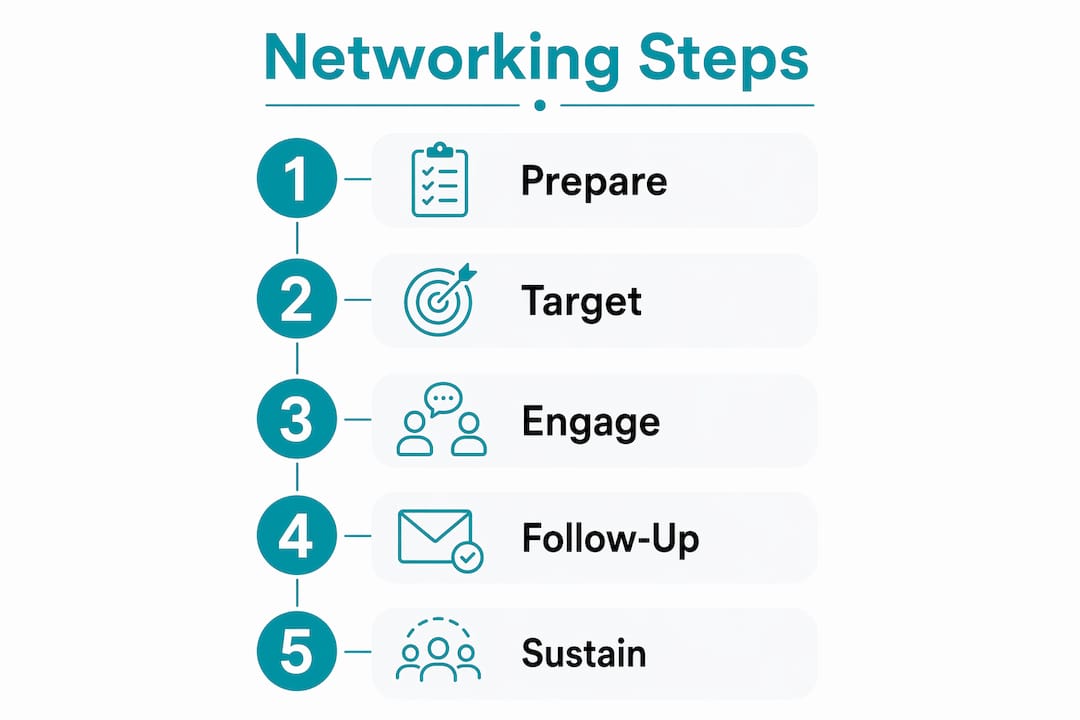
Set a weekly activity target. Ten new outreach messages per week, combined with five follow-ups on existing conversations, keeps the pipeline moving without burning you out.
What are the best outreach strategies for executive connections?
Warm introductions generate a 46% response rate compared to 3% for cold outreach in executive networking. That gap is not a minor difference. It means cold outreach is statistically close to useless at the executive level, while a warm introduction nearly guarantees a conversation.
Start with your warmest contacts first. Former colleagues, mentors, and past managers are low-risk starting points. Starting with former colleagues reduces the psychological discomfort of early outreach and builds momentum before you approach less familiar contacts. Frame these conversations as career planning discussions, not job requests.
Make it easy for people to help you. Vague requests like “let me know if you hear of anything” put the burden on your contact. Specific requests produce results. Being specific with your ask and providing contextual proof points gives your contacts the language they need to champion you effectively. “I am exploring COO roles at Series B and C SaaS companies in the $20M to $80M revenue range” is a request someone can act on.
Compare cold outreach versus warm introduction approaches:
| Approach | Response Rate | Relationship Quality | Time to Opportunity |
|---|---|---|---|
| Cold LinkedIn message | ~3% | Low | Long |
| Warm introduction via mutual | ~46% | High | Short |
| Recruiter relationship (ongoing) | High | Structured | Medium |
| Industry event follow-up | Medium | Medium | Medium |
Pro Tip: When asking a mutual for an introduction, write the introduction email for them. Busy contacts are far more likely to forward a pre-written note than to compose one from scratch.
LinkedIn engagement is a legitimate outreach tool when used correctly. Commenting substantively on a target contact’s post, sharing their published work, or referencing their ideas in your own content creates visibility before you send a direct message. This warms the relationship without requiring a formal ask.
Follow up every conversation within 48 hours with a brief, specific note. Reference something from the discussion. Then schedule a reason to reconnect in 60 to 90 days, whether that is sharing a relevant article, congratulating them on a company milestone, or checking in after an industry event.
How do you sustain your network to uncover hidden opportunities?
Effective executive networking is built on transparency, reciprocity, and sustained presence rather than transactional asks. The executives who consistently land the best roles are the ones who maintain relationships between searches, not just during them.
Practical habits that keep relationships alive without feeling forced:
- Share a relevant article or industry report with a contact and add one sentence explaining why you thought of them specifically.
- Congratulate contacts on promotions, board appointments, or company news. A two-sentence LinkedIn message takes 90 seconds and keeps you visible.
- Offer introductions to others in your network. Reciprocity is the currency of executive relationships.
- Attend two or three industry conferences per year with the explicit goal of deepening existing relationships, not just collecting new business cards.
- Check in with your top 15 contacts at least once per quarter, even when you are not actively searching.
Long-term relationships with retained executive search partners increase your chances of being considered for hidden mandates. Recruiters present candidates they know and trust. A candidate who has had three honest conversations with a recruiter over two years will always outperform a cold resume submission.
Manage your pipeline with discipline. Update your tracker weekly. If a conversation has gone cold for more than six weeks, schedule a re-engagement. If a contact has not responded after two follow-ups, move them to a lower priority tier and redirect that energy.
What are the common challenges in executive networking?
Most executives face the same set of obstacles. Recognizing them early lets you address them before they stall your search.
- Reluctance to ask for help. Reframe the ask. You are not burdening your contacts. You are giving them the opportunity to support someone they respect. Most people genuinely want to help when the request is clear and specific.
- Low response rates from cold outreach. The solution is not better cold messages. The solution is fewer cold messages and more warm introductions. Invest the time in finding the mutual connection rather than crafting the perfect cold pitch.
- Confusing activity with progress. Sending 100 LinkedIn connection requests is not networking. Twenty real conversations produce more results than 200 unanswered messages.
- Burnout from sustained outreach. Set a weekly cap on new outreach and protect time for follow-ups. Networking is a long game. Burning out in week three helps no one.
- Ignoring feedback signals. If your response rate is below 20% on warm outreach, your positioning statement or message framing needs adjustment. Treat low response rates as data, not rejection.
“Frame networking conversations as strategic career planning, not desperate job hunting. That shift in framing preserves your professionalism and keeps you in control of your narrative.” Keysearch
Adjusting your approach based on results is not failure. It is the mark of a disciplined executive job search.
Key takeaways
Executive networking for senior roles works best when it combines a tiered contact strategy, warm introductions, and sustained relationship management rather than volume-based cold outreach.
| Point | Details |
|---|---|
| Warm introductions win | A warm introduction generates a 46% response rate versus 3% for cold outreach. |
| Tier your contacts | Segment contacts into insiders, specialist recruiters, and warm intro mutuals to prioritize effort. |
| Set measurable targets | Aim for 20 to 30 real conversations in five weeks, requiring roughly 60 outreach attempts. |
| Make it easy to help | Specific, contextualized asks give contacts the language they need to refer you effectively. |
| Sustain relationships year-round | Consistent contact between searches positions you for hidden mandates before they are posted. |
The networking mindset shift that actually changes results
After more than a decade placing executives and working directly with candidates at the VP and C-suite level, the pattern I see most often is this: the professionals who struggle with networking are treating it as a transaction. They reach out when they need something, ask for it directly, and then disappear until the next search. That approach works occasionally, but it works far less often than people think.
The executives who consistently land well do something different. They give first. They share information, make introductions for others, and show up in their contacts’ professional lives before they ever need a favor. By the time they are ready to explore a new role, their network already knows their value. The ask almost makes itself.
I also see a lot of candidates underestimate the recruiter relationship. A cold resume to a search firm is almost always a dead end. But a candidate who has had honest, specific conversations with a retained recruiter about their goals, their timeline, and the types of roles they want? That candidate gets called when the right mandate opens. The difference is not luck. It is relationship capital built over time.
One more thing: do not wait until you are desperate to start. The best time to build your executive network is when you do not need it. If you are reading this mid-search, start today and accept that some of the relationships you build now will pay off in your next search, not this one. That is not a failure. That is how this works.
Kim
How Resumewiz can strengthen your executive job search
Your network opens doors, but your materials have to close them. At Resumewiz, Kim Taynor and her team work directly with executives to build ATS-compliant resumes, LinkedIn profiles, and outreach templates that match the quality of your professional reputation. Every document is built around your specific positioning statement and target roles, so when a recruiter or insider contact asks for your resume, it reinforces everything you have already communicated in conversation. If you want proven job search support built for senior professionals, Resumewiz delivers the full package from personal branding through interview coaching.
Want a recruiter in your corner for your next senior role? Book a free call with Resume Wiz and we will map out your next move together.
FAQ
What percentage of executive jobs are filled through networking?
The majority of senior and C-suite roles are filled through referrals and private channels before a public posting appears. Relying solely on job boards puts you at a structural disadvantage in an executive search.
How do warm introductions compare to cold outreach for executives?
Warm introductions generate a 46% response rate compared to roughly 3% for cold outreach. Investing time in finding a mutual connection consistently outperforms crafting a better cold message.
How many networking conversations should i target in an executive job search?
A structured executive job search targets 20 to 30 real conversations within the first five weeks, which requires approximately 60 outreach attempts across all tiers of your network.
How do i build a relationship with an executive recruiter?
Contact two or three specialist retained search firms that work your function and sector. Have honest conversations about your goals, timeline, and target role types. Maintain contact quarterly so you are known before a relevant mandate opens.
How often should i stay in touch with my executive network?
Reach out to your top 15 contacts at least once per quarter, even when you are not actively searching. Consistent, low-pressure contact keeps you visible and positions you for opportunities before they are announced.
