One Strategic Hook in Your Executive Follow-Up Email
Send a brief, personalized thank-you email within 24 hours of an executive interview, keep it concise, typically about five sentences, and reference one specific point from the conversation. If you haven’t heard back, send one status check after 7 to 10 business days, and at most one more polite follow-up 7 to 10 business days after that. Limit the total follow-ups accordingly.
Key Takeaways:
- Sending a thank-you within 24 hours is crucial, with a follow-up after 7 to 10 business days if no response is received.
- Personalize follow-up emails by referencing specific discussion points and avoid attaching lengthy documents or resumes unless explicitly requested.
- Use a clear subject line with role, name, and focal topic to ensure your message is noticed among many unread emails.
- When multiple interviewers are involved, send individualized messages and stagger follow-ups to maintain professionalism and avoid redundancy.
- Keep all communications concise, strategic, and aligned with the interview conversation to reinforce your fit and demonstrate executive presence.
Table of Contents
- Writing an Interview Follow Up Email for Executives: The Structure That Works
- When Should You Send Each Follow-Up in an Executive Search?
- Ready-to-Adapt Templates for Executive Candidates
- Adding Strategic Lift Without Overstepping
- Common Mistakes and a Final Pre-Send Checklist
- Tailoring the Tone for C-Suite Versus VP-Level Interviews
- Why Personalized Notes Beat One Mass Thank-You
- Handling References and Recommendations in a Follow-Up
- Following Up After You Get Feedback or a Next-Steps Update
- Coordinating Follow-Ups After a Panel or Multi-Round Interview
- Weaving in Personal Branding Without Overselling It
- Why Follow-Ups Separate Serious Candidates From Everyone Else
- Get Hands-On Help Polishing Your Executive Follow-Up
- Sources
- FAQ
Writing an Interview Follow Up Email for Executives: The Structure That Works
A strong interview follow up email executive candidates send has four parts, and each one does a specific job. Skip a part and the email reads either rushed or padded, neither of which projects the composure a senior hire is supposed to have.
Subject line. Use a formula that’s scannable in a crowded inbox: “[Role], [Your Full Name], [Specific Topic or Date].” Something like “VP of Operations, Maria Chen, Thank You, Supply Chain Discussion” tells the recipient exactly what they’re opening before they open it. Skip generic lines like “Thank You” or “Following Up.” Recruiters and hiring committees juggle dozens of threads; specificity gets you found again fast.
Opening. One sentence. Thank the interviewer and name the date or role you discussed. That’s it. Nobody at the VP level or above needs three sentences of pleasantries before you get to the point.
Body. This is where the email earns its place. Include one sentence that connects something raised in the interview to a concrete contribution you could make. If the CFO mentioned a stalled ERP migration, don’t restate your resume. Say you’ve led a similar transition and cut integration time by a specific margin. Harvard Business Review points out that referencing a specific project, challenge, or team goal from the conversation is what signals real engagement, not just courtesy. If you froze on a question or left out something relevant, add a single addendum sentence here. Nowhere else.
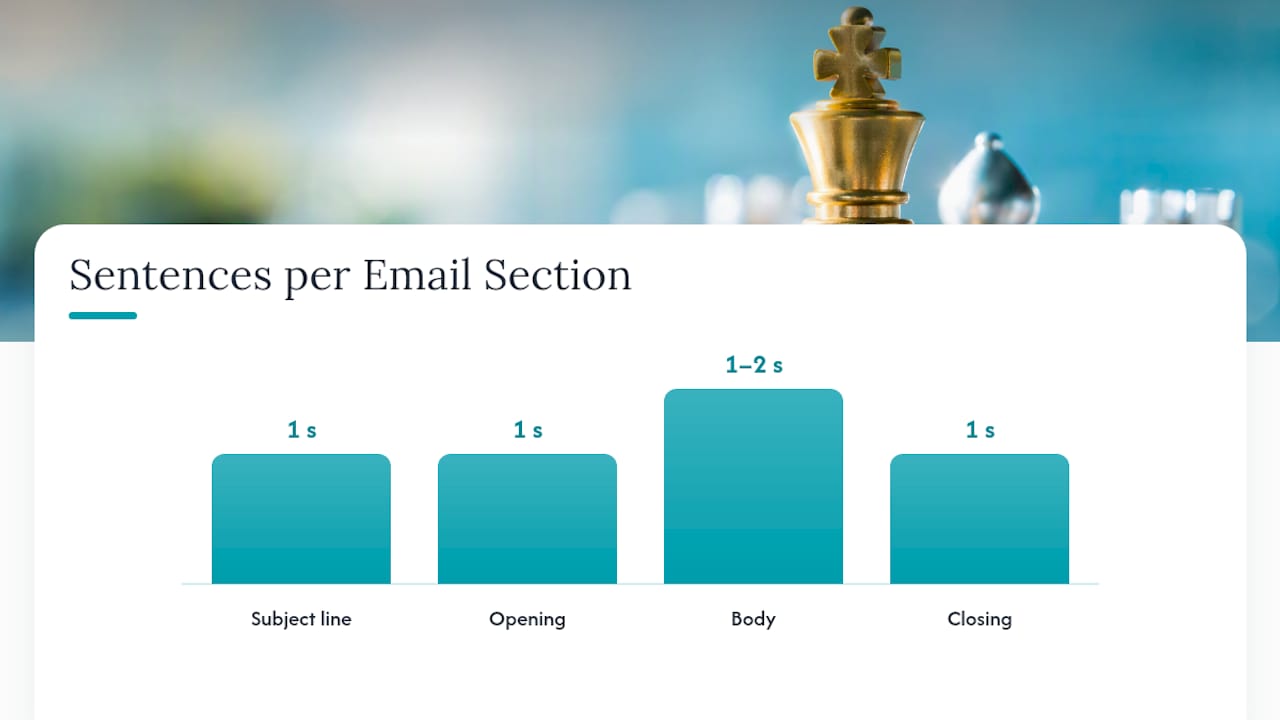
Closing. Restate your interest in one line, ask a simple, direct question about next steps or timeline, and sign off with a professional signature that includes your LinkedIn URL and phone number.
Here’s the shape, compressed:
- Subject: role, name, one topic reference
- Opening: thanks plus interview reference
- Body: one strategic hook tied to a real contribution
- Closing: restated interest, one question, full signature
Keep the whole message under five sentences. Forbes Coaches Council notes that executives tend to read these on mobile between meetings, so brevity isn’t a style preference. It’s the difference between an email that gets read and one that gets skimmed and forgotten.
When Should You Send Each Follow-Up in an Executive Search?
Timing separates a thoughtful follow-up from a desperate one, and the windows tighten as the role gets more senior.
- Send the thank-you within 6 to 24 hours. Same-day is ideal; 24 hours is the outer edge for a fresh, Forbes-recommended response. Anything past 48 hours starts to read as an afterthought, especially at the executive level where responsiveness is itself a signal.
- Send the first status check 7 to 10 business days later, but only if the interviewer didn’t already give you a timeline. If they said “we’ll decide by the end of the month,” don’t email before that date.
- Send one second follow-up another 7 to 10 business days after the first, per The Muse’s guidance on second follow-ups. Cap it there. Two follow-ups plus the original thank-you is the ceiling.
- If you were given a specific decision date, follow up two business days after it passes, not on the default cadence. Missing dates happen constantly in executive searches; a quiet nudge two days late reads as professional patience, not anxiety.
Executive searches often run longer than typical hiring cycles, sometimes stretching well past a month between rounds. Therefore, a second follow-up at the right interval is normal practice, not overeager pursuit.
Ready-to-Adapt Templates for Executive Candidates
Each of these stays under five sentences. Adjust the bracketed details and keep the tone direct.
Thank-you email (send within 24 hours):
- “Thank you for the conversation yesterday about the supply chain restructuring. Your point about vendor consolidation stuck with me. I led a similar initiative that reduced procurement costs by 18% over two years, and I’d welcome the chance to bring that experience to your team. Please let me know if there’s anything else I can provide. Looking forward to next steps.”
First status check (7 to 10 business days later):
- “I wanted to check in on the timeline for the VP of Operations role. I remain very interested and happy to answer any follow-up questions. Could you share where things stand?”
Second follow-up (7 to 10 more business days later):
- “I know executive searches often take longer than expected, so I wanted to send one more note. I’m still very interested in the role and would appreciate any update when you have one.”
Notice none of these restate your full pitch. Grammarly’s guidance on post-interview messaging is consistent on this point: a specific reference plus one clear question outperforms a recap every time.
Adding Strategic Lift Without Overstepping
The best executive follow-ups do more than thank. They reinforce that you understood the interviewer’s actual priority. That means one sentence, not a paragraph, that ties a specific pain point they raised to a quantified result you’ve delivered. "You mentioned churn in the enterprise segment. One sentence, one number, done.
Attachments are trickier. A one-page executive summary or a rough 30-60-90 outline can work, but only when it directly answers something discussed in the interview, and only when you mention it in a single line rather than building the email around it. Experteer’s guidance on strategic follow-ups is clear that these materials help most in senior or C-suite searches, and hurt when they feel unsolicited or oversized.
Pro Tip: If you’re not sure whether an attachment will land well, leave it out of the first thank-you and offer it instead in your closing line: “I’d be glad to share a brief outline of how I’d approach the first 90 days if that would be useful.” Let them ask.
Resist the urge to attach a long deck or a revised resume. Executives read follow-ups fast, and an inline sentence respects that faster than a document they have to open.
Common Mistakes and a Final Pre-Send Checklist
Vague subject lines like “Thank You” get buried. So do emails that re-explain your entire background, which signals you weren’t confident the first conversation landed. Never re-send your resume unless asked; it implies the interview didn’t stick. Typos in a name or title are worse at the executive level than anywhere else in the hiring process, because attention to detail is the whole pitch.
Many candidates skip follow-ups entirely, and those who send even a basic thank-you gain visibility that silent candidates don’t. That alone makes the habit worth building, even before you optimize the wording.
Before you hit send:
- Preview the email on mobile
- Read it aloud once
- Verify every name, title, and date
- Confirm attachments, if any, actually attached
- Double-check the recipient’s email address
Limit yourself to two follow-ups plus one graceful close. If there’s still no response after that, move on.
Tailoring the Tone for C-Suite Versus VP-Level Interviews
A CEO or board-level interviewer reads fewer emails but weighs each one more heavily against organizational fit. Your follow-up to a C-suite contact should skew toward vision and judgment: reference a strategic priority they mentioned (market expansion, culture, succession planning) rather than a tactical detail. Keep it even shorter than the five-sentence baseline if you can. Three or four tight sentences read as confident; five stretched sentences read as trying too hard.
A VP or director-level interviewer, by contrast, often owns the operational side of the decision and appreciates a slightly more concrete hook. Reference a specific process, team structure, or metric discussed, and it’s fine to be a touch more detailed about how you’d execute.
The subject line formula stays the same across levels, but the body sentence should shift in register. For a CFO, mention margin or capital efficiency. For a VP of Engineering, mention a delivery timeline or technical debt reduction. Match the altitude of your example to the altitude of their role.
One more distinction: multi-stakeholder C-suite searches often involve a board member or search committee chair somewhere in the loop. If you’re not sure who makes the final call, keep your language neutral about decision authority. Ask “what are the next steps in the process” rather than “when will you decide,” since the person you’re emailing may not be the one deciding.
Why Personalized Notes Beat One Mass Thank-You
If you met with three or four people during an executive interview loop, send three or four separate emails, not one message copied to everyone. A single group thank-you reads as efficient at best and lazy at worst, especially when the role is senior enough that each interviewer expects individual acknowledgment.
The advantage of personalizing each note is that you can reference a different specific point from each conversation. The recommendation to send individualized notes when you can tie each one to a distinct discussion point holds up particularly well at the executive level, where interviewers often compare notes afterward. If two people receive nearly identical messages, it shows.
Practically, this means taking notes during or immediately after each conversation. Jot down one distinct detail per interviewer: a project they own, a challenge they raised, a comment about team dynamics. Use that detail, and only that detail, in the note to them. Don’t try to reuse a strong line across multiple emails just because it worked well once. Executives talking to each other after a slate of interviews will notice.
If you can’t remember enough distinct detail from each conversation to personalize, that’s useful information too. It may mean you need to take more deliberate notes in future interviews, or ask more specific questions that give you material to reference later.
Handling References and Recommendations in a Follow-Up
Bringing up references in a follow-up email is a matter of timing, not content. If the interviewer explicitly asked for references during the conversation, your follow-up is a good place to confirm you’re preparing them and give a rough sense of when they’ll be ready. One sentence covers it: “I’ll have three references ready to share by Thursday, including my former CFO.”
If references weren’t requested, don’t volunteer them unprompted in a thank-you email. It can read as presumptuous, as though you’re assuming you’ve already advanced past the interview stage. Wait until they ask, or until a status check response signals you’re moving forward.
The exception is a targeted mention of a recommendation that’s directly relevant to something discussed. If the interviewer raised skepticism about your experience with a particular function, and you have a specific former manager who can speak directly to that gap, a brief offer can help: “If it would be useful, I’m glad to connect you with my former direct manager who led the same integration project alongside me.” That’s a strategic use of a reference, not a generic list tacked onto the bottom of an email.
Never attach full reference documents or LinkedIn recommendation screenshots to a thank-you note. It clutters an email that should stay lean, and it signals you’re compensating for something rather than building on a strong interview.
Following Up After You Get Feedback or a Next-Steps Update
Once a recruiter or hiring manager actually responds with feedback or a timeline, your reply should be shorter, not longer. If they say “we’re moving forward to a final round,” a two-sentence reply confirming enthusiasm and availability is enough. Resist the instinct to write a fresh thank-you paragraph restating your interest from scratch.
If the feedback includes a specific note, positive or constructive, address it directly rather than glossing over it. A comment like “the team wants to see more depth on your P&L experience” deserves a targeted one-line response, ideally with a concrete example you didn’t get to share in the interview. This is one of the few moments where adding a short, relevant detail is genuinely welcome rather than intrusive.
When they give you a firm decision date, treat that date as your new default. Don’t send a status check before it arrives. If the date passes with no update, that’s when the two-business-day rule applies: a short, polite note, not a repeat of your original pitch.
If the feedback is a rejection, a brief, gracious reply keeps the door open for future roles at the same company. Thank them for their time, express continued interest in the organization, and stop there. Executive networks are small, and a composed exit note gets remembered longer than most people expect.
Coordinating Follow-Ups After a Panel or Multi-Round Interview
Panel interviews complicate the follow-up math, since you owe individual thanks to each participant but shouldn’t flood a shared thread with parallel messages. The clean approach: send separate, personalized emails directly to each interviewer within the same 24-hour window, but stagger any status checks so you’re not pinging multiple people on the same day for the same update.
If there’s a single point of contact, usually a recruiter or the hiring manager, route your status checks through that person rather than emailing every panelist individually for an update. Panelists expect a thank-you from you; they don’t expect to field your scheduling questions. Ask the recruiter directly: “I wanted to check in on timing for next steps” and let them relay it if needed.
For multi-round searches, where you might meet the same panel or new stakeholders across two or three rounds, keep track of who you’ve already thanked and for what. Repeating a compliment or a reference point across rounds without adding anything new starts to feel mechanical. Each new round deserves a fresh, specific hook, tied to whatever was actually discussed that time, not a recycled version of your first note.
Weaving in Personal Branding Without Overselling It
Your follow-up email is a small extension of your personal brand, but the subtlety matters more than the content. The goal isn’t to repeat your elevator pitch. It’s to reinforce, through the way you write and what you choose to reference, that you think and communicate like the person they’d want in the role.
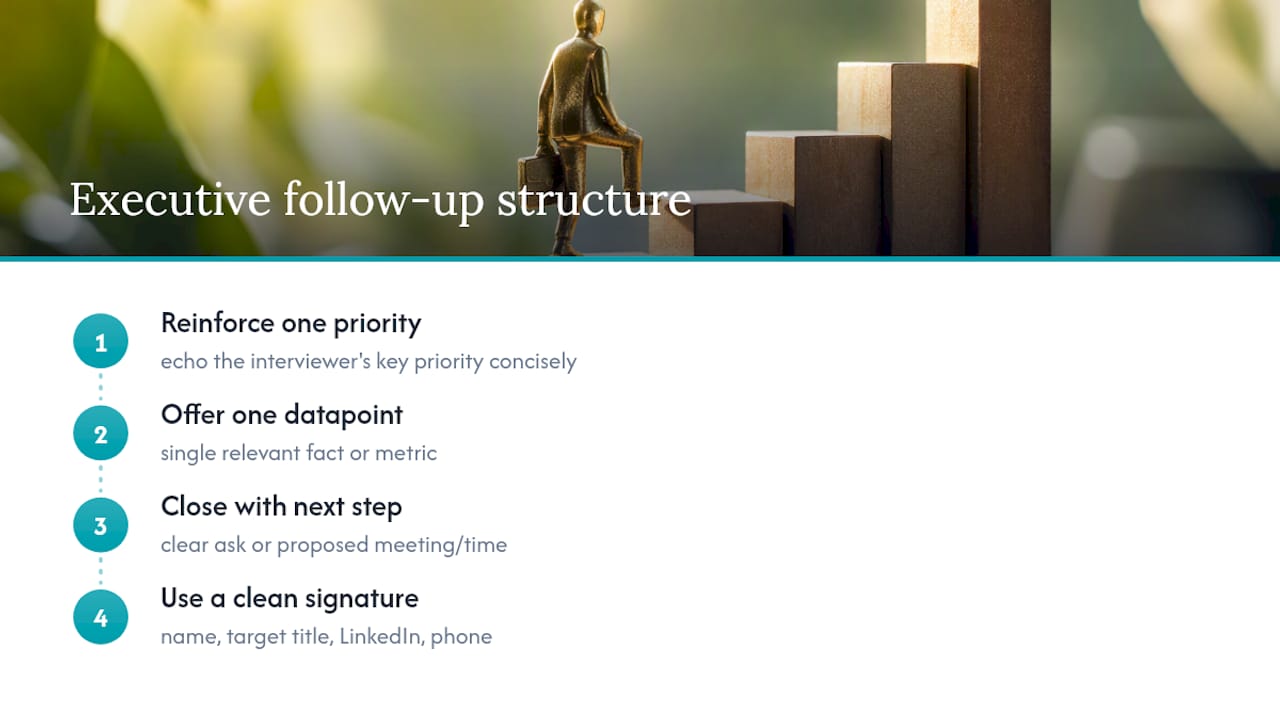
Treat the message the way you’d treat a short strategic memo: reinforce a single priority the interviewer named, offer one relevant datapoint, and close with a clear next step, an approach that mirrors how effective post-interview emails are structured at the senior level. That structure alone communicates executive presence more effectively than any adjective you could use to describe yourself.
Your signature line is part of your brand too. A clean signature with your name, target title or current role, LinkedIn URL, and phone number looks intentional. A signature with no context looks like you dashed the email off between meetings, which, ironically, undercuts the exact impression of composure you’re trying to build.
If you write and speak clearly elsewhere, whether that’s a LinkedIn post, a recent talk, or a published article, it’s fine to mention it in a single line when it’s directly relevant to something discussed. Otherwise, let the quality of your writing itself carry the brand. A tight, well-structured five-sentence email says more about how you’ll communicate as a leader than any line claiming your “strategic” or “results-driven” ever will.
Why Follow-Ups Separate Serious Candidates From Everyone Else
What recruiters notice isn’t politeness. It’s whether a candidate can distill a conversation into one sharp, relevant point instead of a generic recap. Kim Taynor built Resumewiz on over a decade of recruiting experience watching strong candidates lose ground simply because their follow-up read like a form letter, while a mediocre interview paired with a precise, specific note often moved someone forward instead.
Kim
Get Hands-On Help Polishing Your Executive Follow-Up
Writing a five-sentence email sounds simple until you’re staring at a blank draft an hour after a high-stakes interview, trying to find the one sentence that captures your value without sounding like everyone else. Resumewiz gives executives, managers, and career changers the kind of individualized support a generic template can’t: a real review of your specific interview, not a fill-in-the-blank form.

Resumewiz’s services go beyond the resume. Interview coaching sessions prepare you to identify the exact strategic hooks worth referencing afterward, custom outreach templates give you a starting structure built around your target role, and one-on-one document review catches the small wording choices that separate a forgettable follow-up from one that gets forwarded up the chain. For candidates who want the entire search managed end to end, from outreach through final negotiation, the fully managed job search program pairs you directly with a recruiter’s perspective at every stage.
If you have an interview coming up or one still sitting in your inbox unanswered, visit Resumewiz to book a consultation and get a second set of eyes on your next message before you hit send.
Want a recruiter in your corner for your next senior role? Book a free call with Resume Wiz and we will map out your next move together.
Sources
- How To Write A Great Thank-You Email After An Interview (With Example), Forbes Coaches Council
- How to Write a Thank-You Email After an Interview, Harvard Business Review
- Second follow-up email after an interview, The Muse
- Thank-you email after an interview, Grammarly blog
FAQ
How Soon Should I Send a Follow-Up After an Interview?
Send your thank-you within 6 to 24 hours while the conversation is still fresh, and no later than 48 hours. If you don’t hear back, send a first status check after 7 to 10 business days.
What Is the 30-60-90 Rule in an Interview?
It refers to a 30-60-90 day plan, a brief outline of priorities for your first three months in the role. For executive candidates, a condensed version can be mentioned in a follow-up, but only as a one-line offer, not a full attachment sent unprompted.
What Is the Biggest Red Flag to Hear During an Interview?
Vague or shifting answers about timeline, decision authority, or role scope are common warning signs, since they often signal an unclear process on the employer’s side. If you hear this, it’s worth asking a direct clarifying question in your follow-up rather than guessing at next steps.
How Many Times Should I Follow Up If I Don’t Hear Back?
Two follow-ups is the practical limit: one status check around 7 to 10 business days after your thank-you, and one more 7 to 10 business days after that. Beyond that, a final graceful note and moving on is the professional path.
Should I Send a Different Follow-Up to Each Interviewer?
Yes. Individual, personalized notes to each interviewer that reference a distinct point from each conversation come across as far more genuine than one message sent to everyone, especially in panel or multi-round executive interviews.
