Senior Job Search Stalled? Fix It in 2026
A stalled executive job search is defined as a search where applications go out consistently but meaningful responses, interviews, or offers fail to materialize at a rate that reflects your experience level. This is not a personal failure. The 2026 hiring market has structural problems that hit senior candidates hardest: ghost jobs account for 20 to 40% of all listings, applicant tracking systems (ATS) filter out qualified candidates before a human ever reads their resume, and the average search now lasts 6.6 months across roughly 95 applications. When your job search stalled at senior level, the fix is rarely “apply more.” It is apply smarter, network deliberately, and diagnose where the system is breaking down.
Why does a senior job search stall in the first place?
The senior job market operates differently from mid-level hiring. Fewer roles exist at the VP, Director, and C-suite tiers, and competition is concentrated among a smaller, highly credentialed pool. That math alone slows things down.
Ghost jobs make it worse. 20 to 40% of job postings are not actively being filled at any given time. Companies post roles to build talent pipelines, satisfy internal HR processes, or gauge market compensation. Spending hours tailoring applications to these listings is wasted effort. The only reliable way to verify a role is real is to confirm it through direct networking before investing significant time.
ATS filters compound the problem. Most enterprise employers route applications through platforms like Workday or Greenhouse, which score resumes against keyword criteria before a recruiter sees them. A senior candidate with 20 years of experience can be filtered out automatically if their resume does not match the specific language in a job description. This is why mass applying without customization produces near-zero results at the executive level.
The deeper issue is a focus on the wrong metrics. Many senior candidates track interviews as their primary success signal. Interviews are a lagging indicator. Candidates who track leading indicators like new conversations initiated, referrals requested, and informational interviews scheduled maintain better momentum and agency throughout a long search.
- Ghost jobs waste application effort without feedback
- ATS systems filter senior resumes on keyword mismatches
- Mass applying without warm introductions converts poorly
- Tracking only interviews creates a false picture of progress
- Low-hire, low-fire market conditions reduce open role volume
Pro Tip: Before applying to any role, search LinkedIn for a first- or second-degree connection at that company. A single warm introduction bypasses the ATS entirely and puts your name in front of a decision-maker directly.
How do you diagnose where your executive job search is stuck?
A stagnant career at senior level almost always has a specific bottleneck. The fix depends entirely on where in the funnel the breakdown occurs. Treating all stalls the same way is the most common mistake senior candidates make.
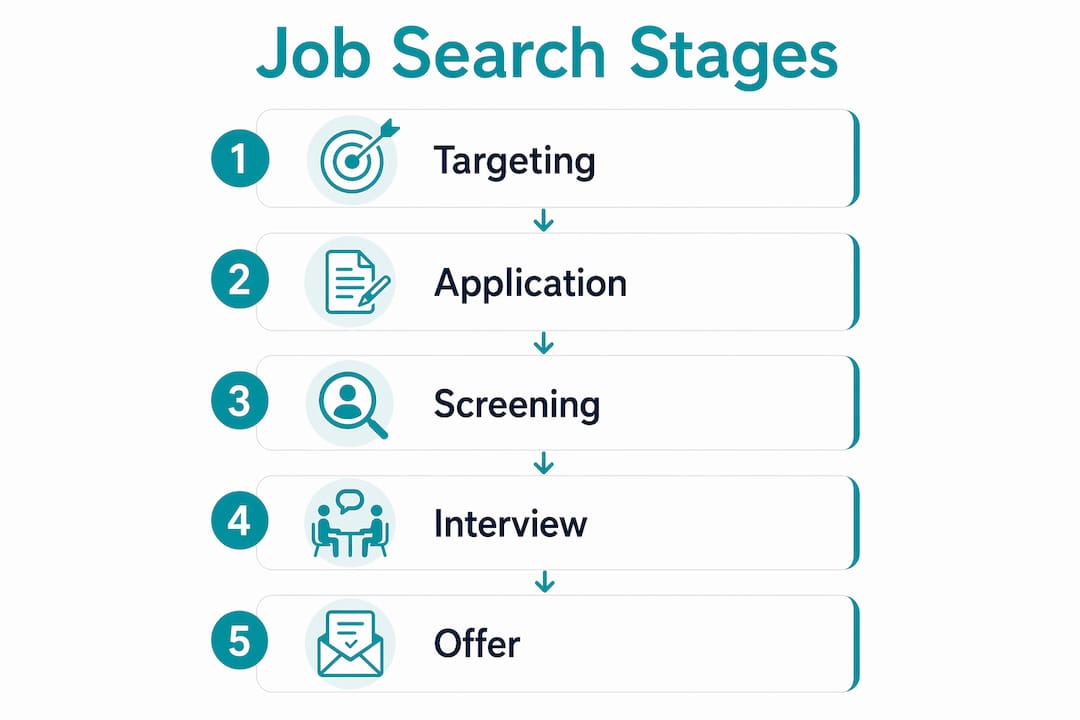
Stage-based tracking is the diagnostic tool that separates effective searches from ineffective ones. Map your search across three stages: applications sent, recruiter screens completed, and final-round interviews reached. The stage where volume drops sharply is where your problem lives.
| Stage where stall occurs | Most likely cause | Targeted fix |
|---|---|---|
| No responses to applications | Poor ATS optimization or wrong targeting | Rewrite resume with role-specific keywords; narrow target list |
| Recruiter screens but no interviews | Salary misalignment or unclear positioning | Clarify your value proposition; research market compensation |
| Interviews but no offers | Weak evidence stories or poor fit signals | Build specific STAR-format examples; refine cultural alignment |
| Offers below expectations | Negotiation gap or overqualification signals | Reframe experience; practice salary anchoring |
Each stage requires a different response. If you are getting no responses, the problem is targeting and formatting. If you are getting screens but no interviews, the problem is positioning or compensation expectations. If you are getting interviews but no offers, only about 27% of interviews convert to offers, and the gap is almost always in how candidates present evidence of impact rather than just experience.
Pro Tip: Run a weekly 30-minute review of your search activity. Log applications sent, conversations initiated, and referrals requested. Structured weekly reviews convert disconnected efforts into a compounding search system that builds momentum over time.
What are the best senior job search tips to regain momentum?
Regaining momentum requires a shift from reactive applying to proactive, multi-channel activity. The following practices are the highest-leverage moves for senior candidates.
-
Narrow your target list to 20 to 30 companies. Research each one. Know their growth priorities, recent leadership changes, and open challenges. This depth lets you write targeted outreach that reads like a business conversation, not a job application.
-
Rebuild your resume around impact, not tenure. Senior CVs should be two pages maximum, with early-career history trimmed to a brief summary. Hiring managers at the executive level want to see revenue generated, costs reduced, teams built, and problems solved. Every bullet should answer the question: “So what?”
-
Activate your LinkedIn presence deliberately. Post one short insight per week on a topic in your domain. Comment meaningfully on posts from people at your target companies. This creates inbound visibility without cold outreach. Recruiters who specialize in senior placements actively monitor LinkedIn activity as a signal of engagement and relevance.
-
Request informational interviews, not job leads. Ask former colleagues, industry peers, and second-degree connections for 20-minute conversations about their company or function. These conversations surface unadvertised roles and generate referrals organically, without the awkwardness of asking directly for a job.
-
Schedule your search like a part-time job. 20 to 25 focused hours per week prevents the burnout that leads to desperation signals in interviews. Block specific times for applications, outreach, and follow-up. Unstructured searching leads to scattered effort and low output.
-
Add one visible credential or certification. A recent course completion in a relevant area, such as AI strategy, financial modeling, or executive leadership, signals to hiring managers that you are current and growth-oriented. This matters especially for candidates over 50 who face implicit bias around adaptability.
Pro Tip: Use LinkedIn’s “Open to Work” feature set to recruiters only, not the public green banner. This signals availability to headhunters without broadcasting your search to your current employer or network.
How does the hidden job market work for senior candidates?
The hidden job market is the set of roles filled through referrals, direct outreach, and internal promotions before they are ever posted publicly. At the senior level, this market is larger than the visible one. Many VP and C-suite roles are filled through executive search firms or direct network referrals and never appear on job boards at all.
Referral hires convert at four times the rate of cold applications. That single statistic explains why networking is not optional at the executive level. It is the primary hiring channel.
Accessing this market requires a different mindset. You are not looking for job postings. You are building relationships with people who will think of you when a need arises or when someone asks them for a recommendation.
- Identify 10 to 15 people in your network at target companies and schedule conversations over the next 60 days
- Reconnect with former managers, direct reports, and peers who have moved into decision-making roles
- Engage with executive search firms that specialize in your function or industry, since they fill roles that never reach job boards
- Attend industry conferences and association events where hiring managers, not HR teams, are present
- Write or speak publicly on topics in your domain to create inbound interest from companies you have not yet contacted
The goal is not to ask for jobs. The goal is to be the person who comes to mind when a need exists. That positioning takes consistent, low-pressure relationship activity over weeks and months, not a single round of outreach.
Key Takeaways
A stalled senior job search is almost always a targeting and channel problem, not a qualifications problem. The fix requires diagnosing the specific bottleneck and applying the right tactic at the right stage.
| Point | Details |
|---|---|
| Diagnose your bottleneck first | Identify whether the stall is at applications, screens, or interviews before changing tactics. |
| Ghost jobs waste senior effort | Verify roles through direct networking before investing time in applications. |
| Referrals outperform cold applying | Referral hires convert at four times the rate of cold applications at senior levels. |
| Resume brevity signals confidence | Senior resumes should be two pages maximum, focused on recent, measurable impact. |
| Track leading indicators | Measure new conversations and referrals initiated, not just interview invitations received. |
What I have learned working with stalled senior job seekers
After more than a decade placing executives and working with senior professionals on their searches, the pattern I see most often is not a skills gap or a market problem. It is a systems gap.
Most senior candidates are excellent at their jobs. They are not excellent at running a structured, multi-channel job search, because they have never had to do it before. Their last two or three roles came through relationships or recruiters reaching out to them. When that stops working, they default to what they know: apply online, wait, repeat.
The candidates who break through fastest are the ones who treat the search like a project with defined inputs, milestones, and weekly reviews. They stop measuring success by interview invitations and start measuring it by conversations initiated and relationships deepened. They also get honest about their positioning. If you are getting screens but no interviews, your resume is not the problem. Your salary expectations or your value narrative is the problem. That is a harder conversation, but it is the one that moves the needle.
One more thing I want to say directly: patience combined with discipline is not passive. The average search takes 6.6 months. That is not a failure timeline. That is the actual market. The candidates who burn out at month three are the ones who were measuring the wrong things and applying without a system. Build the system first. The offers follow.
Kim
How Resumewiz helps senior professionals move faster
A stalled search at the executive level often comes down to one fixable problem: your resume and LinkedIn profile are not doing the work they should. Resumewiz was built specifically for senior professionals who need more than a template.

Resumewiz offers ATS-compliant resume rewrites, LinkedIn profile optimization, and personalized outreach templates designed for VP, Director, and C-suite candidates. Founder Kim Taynor brings over 10 years of recruiting experience to every engagement, which means your materials are built to pass ATS filters and resonate with the hiring managers who actually make decisions. If your applications are going out and nothing is coming back, explore Resumewiz solutions and find out what a targeted, professionally positioned search looks like.
Want a recruiter in your corner for your next senior role? Book a free call with Resume Wiz and we will map out your next move together.
FAQ
Why is my senior-level job search getting no responses?
No responses almost always point to ATS filtering or poor targeting. Rewrite your resume with keywords pulled directly from each job description and narrow your applications to roles where you have a genuine fit.
How long does a senior job search typically take?
The average job search in 2026 lasts 6.6 months and requires roughly 95 applications. Senior searches often run longer because fewer roles exist at that level.
What is the most effective way to find unadvertised senior roles?
Direct networking and executive search firms are the primary channels. Referral hires convert at four times the rate of cold applications, making relationship-building the highest-return activity in a senior search.
How should a senior executive’s resume be formatted?
Keep it to two pages maximum. Focus on the last 10 to 15 years of experience, quantify impact in every bullet, and trim early-career history to a brief summary line to avoid signaling overqualification.
What is a leading indicator in a job search?
A leading indicator is an activity you control, such as conversations initiated or referrals requested, that predicts future results. Tracking these gives you more agency than waiting for interview invitations, which are lagging indicators you cannot directly control.
