Salary Expectation Mismatch: What Both Sides Must Know
A salary expectation mismatch happens when a candidate’s target pay materially differs from what an employer has budgeted, and the gap is wide enough to block agreement or force a renegotiation neither side wanted. The result is usually a failed hire, a delayed offer, or a resentful acceptance that leads to early turnover. JobLeads data puts the average U.S. gap at roughly $33,332, not a rounding error, but a number large enough to derail even strong candidacies.
Both sides lose when this goes unaddressed. Candidates leave money on the table or lose offers entirely. Employers burn weeks of recruiter time and restart searches that cost real money. The fastest fix is also the simplest: surface the number early, frame the conversation around total compensation rather than base salary alone, and use language that keeps both parties at the table.
Three phrases worth keeping ready:
- Candidate, early screen: “Based on my research and the scope of this role, I’m targeting a range of $X to $Y. Does that align with your budget?”
- Employer, initial outreach: “Our budgeted range for this level is $X to $Y, inclusive of base. Can you share where you’re targeting?”
- Candidate, offer stage: “I’m genuinely excited about this role. The base is a bit below my target, is there flexibility on the equity or signing bonus?”
Table of Contents
- Why does a salary expectation mismatch happen?
- What does a mismatch actually cost both sides?
- How to prevent and resolve a salary mismatch
- How big is the salary gap problem in the U.S.?
- Common mistakes that make salary mismatches worse
- When should you accept, counter, or walk away?
- Key Takeaways
- The part of salary negotiation most people get wrong
- Resumewiz helps you negotiate from a position of strength
- Useful sources and further reading
Why does a salary expectation mismatch happen?
The disconnect rarely comes from bad faith. It comes from five structural problems that show up repeatedly across industries and hiring levels.
Skills and experience gaps. A candidate with three years of experience sometimes benchmarks against senior-level salaries because a few high-profile projects inflated their self-assessment. The employer’s range reflects validated scope; the candidate’s expectation reflects aspiration.
Stale or misapplied market data. Salary sites like Glassdoor and LinkedIn Salary are useful starting points, but they aggregate broadly. A “Senior Product Manager” in Austin and one in San Francisco carry very different market rates, and relying on a single salary website without layering in role-specific research or network intel is one of the most common negotiation mistakes candidates make.
Missing pay transparency. When job postings omit salary ranges, candidates guess. Those guesses skew high. Pay transparency laws in states like Colorado, New York, and California have pushed more employers to post ranges, but a large share of U.S. postings still don’t include them. Candidates who feel awkward asking about pay early in the process end up in offer conversations with no shared baseline.
“Misalignment often stems from failing to discuss pay expectations early and not standardizing ranges across experience levels. When neither side names a number until the offer stage, the gap has had weeks to widen in both directions.” Kim Top Echelon recruiting research
Different definitions of compensation. A candidate hears “base salary.” The employer is thinking total rewards: base, bonus target, equity, health benefits, 401(k) match, and remote flexibility. A $15,000 gap in base pay can effectively disappear when a 15% annual bonus and full health premium coverage enter the picture. Neither side makes this math explicit often enough.
Internal range problems. Some employers post roles before their compensation team has finalized a range, or they set ranges inconsistently across levels. A manager-level role that pays the same as a senior individual contributor role creates internal confusion that bleeds into external negotiations.
What does a mismatch actually cost both sides?
The costs are asymmetric but real for everyone involved.
For candidates, the damage compounds over time. Accepting a below-market offer to “get in the door” often means starting a salary negotiation from a lower base at every subsequent job. Underselling early can suppress lifetime earnings by tens of thousands of dollars. On the other side, walking away from a misaligned offer without a counteroffer means losing a role that might have been closeable with one conversation.
Employers absorb costs that are harder to see on a spreadsheet but show up in hiring metrics. A position that goes unfilled for an extra four to six weeks because of a late-stage pay mismatch carries real productivity costs. Reputational harm is subtler: candidates who feel misled about compensation share that experience on review platforms, which affects future applicant quality. There is also a pay-equity dimension. Employers who adjust offers ad hoc without checking internal equity first risk pay compression and discrimination claims, particularly when adjustments are applied inconsistently across demographic groups.
Operationally, a mismatch that surfaces at the offer stage means a recruiter has already spent hours screening, scheduling, and debriefing. That time is gone whether the hire closes or not.
Pro Tip: Before extending an offer, run a quick internal equity check: compare the proposed salary against what current employees in equivalent roles earn. A $5,000 bump to close a candidate can create a $15,000 retention problem if a tenured employee finds out.
How to prevent and resolve a salary mismatch
Prevention is faster and cheaper than repair. Here is what each side should do.
What employers should do
- Set a defined salary range before the role goes to market, not after the first round of interviews.
- Post the range in the job description when state law or company policy permits. Pay transparency reduces early-stage drop-off and improves applicant quality.
- Ask about compensation expectations in the first recruiter screen, using neutral language: “We have a budgeted range for this role. Can you share where you’re targeting so we can confirm alignment early?”
- Standardize ranges across levels and review them against current employee pay before extending any offer.
- When base pay is constrained, prepare a total rewards summary that itemizes bonus potential, equity, benefits value, and any remote or flexible work premium.
What candidates should do
- Research salary benchmarks using at least two sources: a salary aggregator (Glassdoor, Levels.fyi for tech roles) and direct network conversations with peers in similar roles.
- Set a target range, not a single number. A range signals flexibility without giving away your floor. Giving a researched range and asking the employer for their range when you lack role detail is the most effective approach.
- Decide your walk-away number before the conversation starts. Knowing your reservation value keeps emotion out of the room.
- When the base offer falls short, pivot: “I’m very interested in this role. Is there room to look at the signing bonus or equity component?”
- Avoid sharing personal financial reasons for your number. Framing around role scope and market data keeps the conversation professional and protects your leverage.
Pro Tip: The best moment to ask about a salary range is before you give yours. Try: “Before I share my target, could you tell me the budgeted range for this level? I want to make sure we’re in the same ballpark.” Most recruiters will answer.
Scripts for three key moments
Initial screen (candidate): “My research puts the market rate for this scope at $X to $Y. I’m targeting the upper half of that range given [specific experience]. Does that work with your budget?”
Offer stage (candidate counteroffer): “Thank you for the offer. I’m excited about the role and the team. The base is about $Z below my target. Is there flexibility there, or can we look at the full package?”
Offer stage (employer, holding firm on base): “Our base range is fixed at this level for internal equity reasons, but we can look at an accelerated review at six months and a stronger signing bonus. Would that address the gap?”
Candidates who negotiate total compensation and align a role with long-term goals consistently secure better outcomes than those who focus only on base pay.
How big is the salary gap problem in the U.S.?
The scale of the problem is larger than most hiring managers assume.
JobLeads analysis found that U.S. candidates expect an average of $33,332 more than employers offer, compared to a global average gap of $10,411. That U.S. figure reflects a market where cost-of-living variation, remote work, and post-pandemic salary inflation have all widened the distance between candidate expectations and employer budgets.
Pay transparency expectations are shifting the dynamic. Candidates increasingly expect salary ranges in job postings, and a growing share report they won’t apply to a role that omits compensation information entirely.
| Metric | Figure |
|---|---|
| Average U.S. salary expectation gap | $33,332 |
| Global average expectation gap | $10,411 |
| U.S. gap vs. global gap | U.S. gap is notably larger (JobLeads data) |
Preparation and a defensible range matter more in this environment than ever. A candidate who walks into a salary conversation with a researched range and a clear rationale is far better positioned than one who names a number based on gut feel or a single Glassdoor search.
Common mistakes that make salary mismatches worse
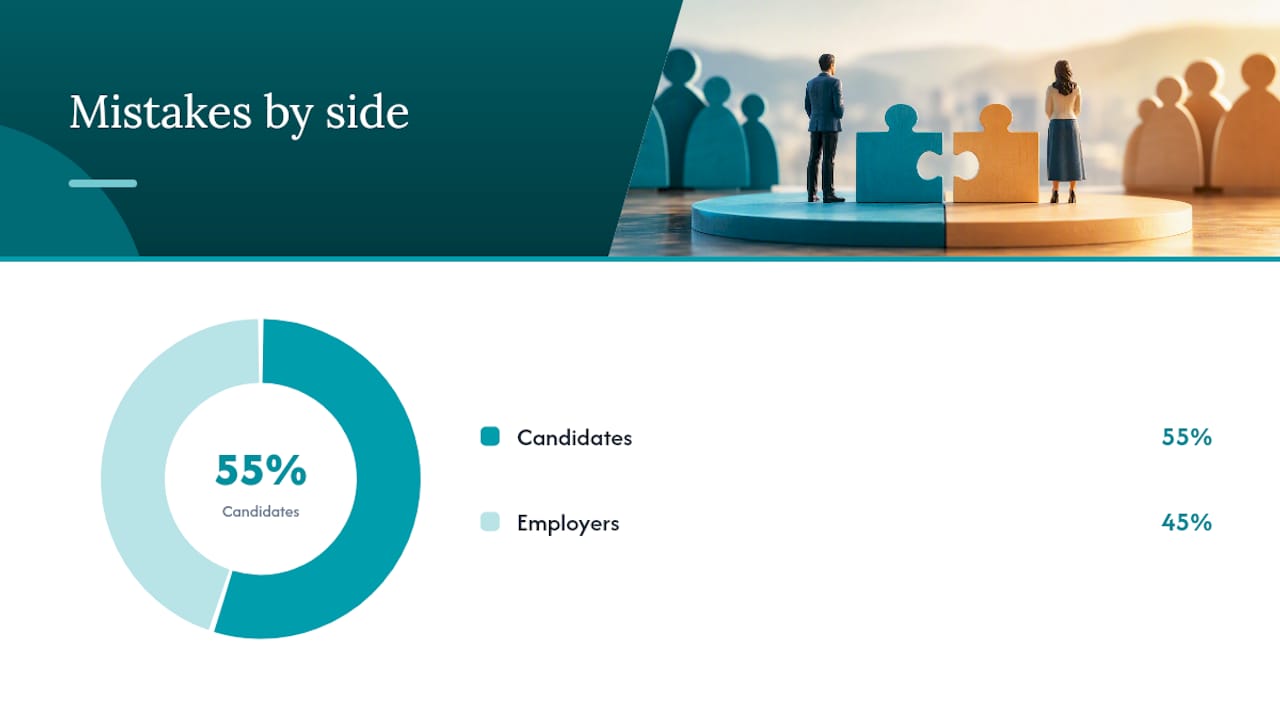
Most mismatches are preventable. These are the errors that turn a manageable gap into a broken negotiation.
Candidate mistakes:
- Giving a single hard number instead of a range, which eliminates flexibility and signals inexperience.
- Relying on one salary website without cross-referencing role-specific data or network intel.
- Sharing personal financial needs (“I need this amount because of my rent”) rather than market-based rationale. Salary consultants consistently warn that over-sharing personal details undermines professional leverage.
- Treating the base salary as the only negotiable variable and ignoring bonus, equity, and benefits.
- Playing hard-to-get instead of showing genuine enthusiasm. Enthusiasm creates goodwill; withholding it rarely creates leverage.
Employer mistakes:
- Asking candidates for their salary history or current pay before sharing the role’s range, which anchors the conversation to the wrong number.
- Applying the salary question inconsistently across candidates, which creates legal exposure and internal equity problems.
- Posting roles without a range and then expressing surprise when late-stage expectations diverge.
- Failing to ask neutral, open-ended questions and invite a range rather than a single figure.
- Expanding an offer ad hoc for one candidate without checking what current employees in equivalent roles earn.
When should you accept, counter, or walk away?
Not every gap is worth fighting over, and not every offer is worth accepting. Here is a short framework for making the call.
Evaluate these factors before deciding:
- Does the total compensation package (base, bonus, equity, benefits) meet your minimum threshold?
- Does the role scope and growth trajectory justify a short-term pay concession?
- Is the gap small enough that one strong performance review could close it within 12 months?
- Are there non-monetary factors (remote flexibility, title, team quality) that offset the difference?
A conservative timeline:
- Receive the offer. Express genuine appreciation and ask for it in writing.
- Take 24 hours to review the full package against your research and walk-away number.
- Within 48 to 72 hours, respond with a counteroffer or acceptance. Waiting longer signals indecision and can cool employer enthusiasm.
- After one counter exchange, decide: accept, request a final conversation, or decline.
Rules of thumb:
- Accept when the total package is within 5 to 10% of your target and the role aligns with your 2 to 3 year career plan.
- Counter when the gap is meaningful but the role is right. One well-framed counteroffer is almost always appropriate.
- Walk away when the base is below your reservation value and the employer has confirmed no flexibility on any component of the package.
For employers deciding whether to expand a range:
- Check whether the candidate’s ask falls within the external market range for the role.
- Run an internal equity check against current employees at the same level.
- Determine whether a total rewards adjustment (signing bonus, accelerated review) can close the gap without changing the base band.
- If expanding the base band is necessary, flag it for compensation review before extending the revised offer.
Key Takeaways
A salary expectation mismatch is most often preventable: surface the number early, frame the conversation around total compensation, and use researched ranges on both sides.
| Point | Details |
|---|---|
| Define ranges before outreach | Employers who set and share ranges early cut late-stage mismatch and improve applicant quality. |
| Use a range, not a single number | Candidates who give a researched range retain flexibility and signal market awareness. |
| Total comp closes gaps | When base pay is constrained, bonus, equity, and benefits can offset a qualitative base difference. |
| The U.S. gap averages $33,332 | JobLeads data shows U.S. candidates expect roughly $33,332 more than employers offer on average, compared to a global average gap of $10,411. |
| Resumewiz coaching sharpens your position | Resumewiz’s salary negotiation coaching and market benchmarking help candidates build defensible ranges and scripts before the offer conversation. |
The part of salary negotiation most people get wrong
Most candidates treat the salary conversation as a single moment: the offer call. It isn’t. It’s a sequence that starts the second a recruiter reaches out and ends only when the offer letter is signed. Every touchpoint before that letter is a chance to either narrow the gap or widen it.
What I see most often in career coaching is candidates who did the hard work of preparing a range but then abandoned it the moment a recruiter pushed back. The pushback is not a signal to retreat. It’s a signal that the negotiation has started. Staying calm, reframing around total compensation, and showing genuine enthusiasm for the role while holding a defensible position is what actually moves the number.
The other pattern worth naming: employers who treat salary conversations as a formality rather than a process. Ranges built on outdated benchmarks, offers extended without internal equity checks, and recruiters who ask for a candidate’s number before sharing the company’s range all create mismatches that could have been avoided in the first five minutes of a screen call.
Pay transparency is not just a legal trend. It’s a hiring efficiency tool. The employers who post ranges, ask early, and frame compensation as a full package close faster and retain better.
Resumewiz helps you negotiate from a position of strength
Knowing the market rate is one thing. Walking into a salary conversation with a scripted, confident response is another. Resumewiz offers salary negotiation coaching, market benchmarking, and interview preparation specifically designed for mid- to senior-level professionals who want to close the gap between what they’re offered and what they’re worth.

The service maps directly to the problems this guide covers: building a defensible salary range from real market data, preparing scripts for the initial screen and the counteroffer, and coaching candidates through the full offer sequence without the emotional bias that derails most negotiations. For executives and managers navigating complex total compensation packages, that preparation is the difference between accepting the first number and negotiating the right one.
Start with Resumewiz to get salary negotiation coaching, a market-aligned resume, and a job search strategy built around your target compensation.
Useful sources and further reading
The sources below back the data and recommendations in this guide. Each is worth reading directly if you want to go deeper on a specific aspect of salary negotiation or hiring process design.
| Source | What it covers |
|---|---|
| JobLeads / HR Executive | U.S. salary expectation gap data ($33,332 average); scale of the mismatch problem nationally |
| Harvard Business Review | How to answer the salary expectations question with a defensible, research-backed range |
| PON / Harvard Negotiation | Counteroffers and total compensation framing; long-term negotiation strategy |
| Indeed Employer Guide | Employer best practices for asking about salary expectations and maintaining internal equity |
| Forbes / Elizabeth Pearson | Five common negotiation mistakes candidates make, including over-reliance on salary sites |
| Business Insider | Salary consultant advice on negotiation myths, enthusiasm, and avoiding personal oversharing |
| Top Echelon | Recruiter-side analysis of why expectation gaps form and how to close them earlier in the process |
| Bradsby Group | Practical interview scripts for answering the salary expectations question |
| Resumewiz | Salary negotiation coaching, executive resume writing, and managed job search for mid- to senior-level professionals |
Want a recruiter in your corner for your next senior role? Book a free call with Resume Wiz and we will map out your next move together.
